Why I Almost Quit Tai Chi — And What Finally Made It Click
I started tai chi hoping to feel calmer and move better, but at first, it just felt confusing and slow. I doubted myself, almost gave up. But something kept pulling me back. Over time, I learned it wasn’t about perfect forms or quick results — it was about showing up, tuning in, and avoiding the common missteps that trip beginners. This isn’t a miracle fix; it’s real progress through small, smart changes. Let me share what actually worked — and what nearly made me walk away.
The Misconception That Almost Made Me Quit
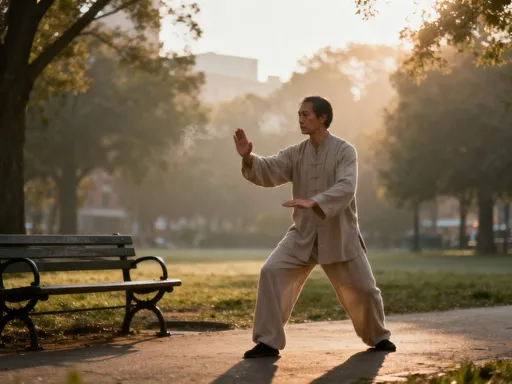
When I first stepped into a tai chi class, I carried expectations shaped by modern fitness culture: fast results, visible effort, and measurable progress. I imagined that within weeks, I’d feel deeply relaxed, move with grace, and experience a dramatic shift in flexibility and energy. Instead, what I found was slow, repetitive motion that seemed almost too gentle to be effective. My arms floated through the air like feathers, my feet glided across the floor, and after 30 minutes, I felt neither energized nor transformed — just mildly bored. I began questioning whether I was wasting my time. Why was I moving so slowly? Was this really doing anything at all?
The truth I eventually came to understand is that tai chi operates on a completely different principle than most physical activities. Unlike aerobics or strength training, its benefits are not immediate or outwardly dramatic. Tai chi is not about intensity — it’s about awareness. The slowness is not a limitation; it’s the core mechanism. By moving deliberately and with control, the practice trains the nervous system to recognize subtle shifts in balance, weight distribution, and muscle engagement. This internal calibration is what builds true stability and coordination over time. What I mistook for monotony was actually the foundation of deep body-mind integration.
My turning point came when I stopped measuring progress by how I looked and started paying attention to how I felt. I noticed that after a session, my shoulders sat lower. My breathing felt deeper, more rhythmic. I caught myself standing taller while waiting in line at the grocery store. These micro-shifts were easy to overlook, but they were real. Once I reframed my expectations — from performance to presence — my relationship with tai chi began to change. I no longer saw it as a workout to endure, but as a daily check-in with my body and mind. That shift in mindset saved my practice.
Choosing the Wrong Style or Teacher — A Costly Mistake
One of the most overlooked factors in tai chi success is finding the right style and instructor. In my early enthusiasm, I signed up for a class at a local community center without researching the approach. The teacher was energetic and charismatic, demonstrating flowing sequences with flair. But as the class followed along, I struggled to keep up. Movements were introduced quickly, with little explanation. Corrections were rare, and when they came, they felt more like performance notes than functional guidance. I left each session feeling more confused than centered, as if I were mimicking dance steps without understanding their purpose.
What I didn’t realize then was that tai chi is not a one-size-fits-all practice. Different styles serve different needs. The Yang style, for example, is widely practiced and emphasizes smooth, even-paced movements ideal for improving balance and reducing stress. The Chen style includes more dynamic shifts, bursts of power, and twisting motions, making it suitable for those seeking greater physical engagement. The Sun style, with its higher stances and agile footwork, is often recommended for older adults or those with limited mobility. Each has value, but choosing the right one depends on individual goals and physical condition.
My breakthrough came when I switched to a smaller class taught by a certified instructor who prioritized clarity over spectacle. She broke down each movement into manageable parts, explained the biomechanics behind them, and offered gentle, personalized corrections. She emphasized safety, alignment, and intention — not speed or perfection. For the first time, I began to understand *why* I was doing what I was doing. I learned that the gentle forward press of the hand in “ward off” wasn’t just decorative — it trained grounded strength and directional focus. This functional approach transformed my understanding and rebuilt my confidence. The right teacher didn’t just teach moves — they taught meaning.
Skipping the Basics — Why Form Matters More Than Flow
In my eagerness to “get good” at tai chi, I made a classic beginner’s error: I rushed through the fundamentals. I wanted to string together the full 24-form sequence, to move gracefully from one posture to the next without hesitation. But in my haste, I neglected the building blocks — stances, weight shifts, spinal alignment, and joint relaxation. I stood in horse stance with my knees caving inward, leaned too far forward in bow stance, and held tension in my shoulders without realizing it. Unsurprisingly, my body began to protest. I developed a dull ache in my knees, my balance felt unstable, and I often felt more fatigued after practice than before.
It wasn’t until I attended a workshop focused solely on foundational postures that I understood where I’d gone wrong. A senior instructor emphasized that tai chi is not about how much you do, but how well you do it. Precision in form is not pedantic — it’s protective. Proper alignment reduces strain on joints, ensures efficient energy transfer, and allows for sustained practice without injury. For example, in a correct bow stance, the front knee should be aligned over the ankle, the back leg gently extended, and the pelvis level. This creates a stable base that supports movement without compromising the knees.
I started dedicating 10 to 15 minutes of each session to drilling basics: *ward off*, *roll back*, *press*, and *push*. At first, it felt tedious. But over time, I noticed my balance improving, my movements becoming smoother, and the knee discomfort fading. More importantly, I developed a sense of internal stability — a quiet confidence in my posture that carried into daily life. I realized that mastery in tai chi isn’t about memorizing forms; it’s about embodying principles. When form is rooted in function, the flow naturally follows.
Practicing Inconsistently — The Hidden Barrier to Progress
Like many adults with busy lives, I initially treated tai chi as a weekend activity — something to squeeze in when I had a free hour, usually after accumulating days of stress and stiffness. I’d practice for 45 minutes on Saturday, feel slightly better, and then return to my routine, only to repeat the cycle the following week. While these longer sessions provided temporary relief, I noticed that each time I returned to practice, I had to relearn what I’d barely begun to internalize. My body felt stiff, my coordination was off, and I struggled to recall the sequence. Progress felt elusive, and frustration crept back in.
What I failed to grasp was that tai chi thrives on consistency, not duration. Its benefits accumulate through repetition and regular reinforcement. Just as brushing your teeth once a week won’t prevent cavities, practicing tai chi sporadically won’t rewire posture, balance, or nervous system regulation. The real transformation happens in the small, daily repetitions — the quiet moments when you stand still and breathe, when you shift your weight slowly from foot to foot, when you roll your shoulders back and align your spine without thinking.
The shift came when I committed to just 10 minutes a day. No grand sessions, no perfect conditions — just showing up. I practiced in the morning before breakfast, in my living room, in bare feet on a yoga mat. Some days, I only did three movements. Others, I repeated a single stance until it felt grounded. But the rhythm mattered more than the content. Within weeks, I noticed changes: my posture improved without effort, my morning stiffness diminished, and I felt more centered during stressful moments. The daily rhythm created a subtle but powerful undercurrent of stability. Tai chi stopped being an event and became a habit — a quiet anchor in my day.
Ignoring the Mind-Body Link — The Core of Tai Chi
For months, I approached tai chi as a physical routine — a series of movements to memorize and perform. I focused on getting the sequence right, on matching the teacher’s示范, on looking the part. But I wasn’t truly present. I moved my body while my mind wandered to grocery lists, work deadlines, or family concerns. I wasn’t meditating; I was multitasking poorly. It wasn’t until a teacher gently reminded the class, “It’s not what you’re doing — it’s how you’re doing it,” that I began to shift my attention inward.
Tai chi is often called “moving meditation” for a reason. Its power lies not in the external form, but in the internal experience. Each movement is an invitation to observe sensation: the slow transfer of weight from heel to toe, the subtle rotation of the pelvis, the release of tension in the jaw as the arms rise. When I began tuning into these details, the practice deepened dramatically. I learned to synchronize my breath with motion — inhaling as I opened, exhaling as I compressed. I noticed how tension in my shoulders dissipated when I softened my gaze and relaxed my tongue. These weren’t mystical experiences — they were tangible, repeatable shifts in awareness.
Over time, this internal focus began to influence my daily life. I found myself pausing before reacting in stressful situations, taking a breath instead of snapping. I noticed my posture while driving, adjusted my stance while waiting, and caught myself clenching my teeth during meetings. The mindfulness cultivated in tai chi wasn’t confined to the mat — it spilled into the rest of my life. I wasn’t just learning to move differently; I was learning to be different. The mind-body connection wasn’t a concept — it became a lived reality.
Overlooking Integration — Making Tai Chi Part of Real Life
One of the greatest misconceptions about tai chi is that it’s something you “do” for 20 or 30 minutes and then set aside, like taking a vitamin or completing a chore. I used to think of it that way — a self-contained practice with no direct connection to the rest of my day. But the real value of tai chi emerges when its principles extend beyond the formal session. It’s not just about how you move during practice — it’s about how you move through life.
I began to notice opportunities to apply tai chi in ordinary moments. When standing in line at the post office, I practiced weight distribution, grounding through my feet, keeping my spine long. When walking up stairs, I focused on smooth transitions, avoiding jerky movements. When sitting at my desk, I checked in with my posture, relaxed my shoulders, and breathed deeply. These small acts weren’t about perfection — they were about awareness. Each moment became a chance to reinforce what I’d learned.
The most profound change was in how I responded to stress. Instead of tensing up when overwhelmed, I’d instinctively drop into a tai chi mindset: slow the breath, soften the body, center myself. This didn’t eliminate pressure, but it changed my relationship to it. I became less reactive, more resilient. Tai chi stopped being an isolated exercise and became a lifestyle — a quiet, ongoing commitment to presence and balance. It wasn’t something I did; it was how I lived.
The Long-Term Payoff — Subtle Shifts, Real Results
Looking back, I can’t point to a single moment when everything changed. There was no dramatic transformation, no sudden breakthrough. Instead, there was a steady accumulation of small, positive shifts. My morning stiffness eased. My balance improved — I no longer wobbled when putting on socks. I slept more deeply and woke with greater clarity. My focus sharpened, not because I tried to force it, but because my nervous system felt calmer, less reactive.
More than physical changes, tai chi reshaped my relationship with myself. It taught me patience — that progress doesn’t have to be fast to be real. It taught me presence — that being here, now, matters more than achieving the next thing. It taught me self-awareness — that listening to my body is not indulgent, but essential. I didn’t “fix” myself through tai chi; I evolved. The practice didn’t erase my challenges, but it gave me tools to meet them with greater ease and resilience.
Today, tai chi is no longer something I struggle to maintain — it’s a natural part of who I am. I move differently, breathe differently, respond differently. And when I reflect on how close I came to quitting, I’m grateful for the missteps. They taught me what really matters: showing up, paying attention, and honoring the process. The slowness that once frustrated me is now my greatest teacher. In a world that values speed and output, tai chi reminds me that sometimes, the most powerful changes happen in silence, in stillness, in the quiet space between movements.