How I Finally Made Real Progress on My Weight — No Gimmicks, Just Living Differently
For years, I chased quick fixes that never lasted. Sound familiar? I’ve been there — frustrated, stuck, and tired of starting over. But what changed wasn’t a pill or a strict diet. It was small, consistent shifts in how I lived each day. This isn’t about perfection; it’s about progress. If you’re ready to make lasting changes without feeling deprived, let’s walk through what actually works — and why real transformation starts long before the scale moves.
The Breaking Point: When Old Habits Stopped Working
There was a moment, not dramatic but deeply personal, when I realized I couldn’t keep going the way I had been. It wasn’t a doctor’s warning or a single number on a scale. It was the way my breath came faster climbing the stairs. It was the constant fatigue, even after eight hours of sleep. It was the frustration of buying new clothes every few years, not because of a change in style, but because nothing fit. The emotional toll was just as heavy — a quiet shame every time I avoided photos or felt self-conscious at family gatherings.
I had tried nearly every popular diet: low-fat, low-carb, juice cleanses, meal replacements. Each began with excitement and promise, but by week three or four, I’d lose motivation. The rules felt too rigid, the hunger too intense. I’d slip — one cookie, one dinner out — and that would spiral into days of overeating. The cycle was predictable: restrict, rebel, regret. And each time, the rebound weight came back faster than before.
What finally broke the pattern wasn’t a new diet, but a new understanding. I began to see that long-term health isn’t built on short-term deprivation. It’s not about how quickly you lose weight, but whether you can keep it off. Research supports this: studies show that most people who lose weight through extreme dieting regain it within three to five years. The body adapts to restriction by slowing metabolism and increasing hunger signals. So, when I stepped off the rollercoaster, it wasn’t because I lacked willpower — it was because the system was flawed.
This realization shifted my focus. Instead of asking, “What can I cut out?” I started asking, “What can I add in?” What habits could I build that didn’t feel like punishment? What changes could I imagine sustaining for the rest of my life? That mindset shift — from restriction to addition, from short-term to long-term — became the foundation of everything that followed.
Rethinking Weight Management: It’s Not Just Calories
For a long time, I believed weight management was simple math: eat fewer calories, burn more, and the pounds would melt away. But the body isn’t a calculator. It’s a complex, adaptive system influenced by hormones, sleep, stress, and daily routines. When I finally understood this, everything changed. I stopped seeing food as the only variable and began looking at the bigger picture of how I lived.
Metabolism, for example, isn’t fixed. It responds to what we eat, how we move, and how well we rest. Chronic dieting can lower resting metabolic rate, making it harder to lose weight over time. But consistent, balanced eating helps stabilize it. Protein, fiber, and healthy fats don’t just keep you full — they support metabolic function. Movement, even gentle daily activity, signals the body to burn energy efficiently. And sleep? It’s not just recovery; it’s regulation. Poor sleep disrupts hormones like leptin and ghrelin, which control hunger and fullness, leading to increased appetite, especially for sugary, high-calorie foods.
Stress plays a powerful role, too. When we’re under constant pressure, the body produces more cortisol, a hormone linked to fat storage, particularly around the abdomen. High cortisol levels also increase cravings for comfort foods, creating a cycle where stress leads to eating, which leads to guilt, which leads to more stress. This isn’t a failure of discipline — it’s biology. Recognizing this helped me stop blaming myself and start addressing the root causes.
What matters most isn’t willpower, but lifestyle patterns. Willpower is finite. It fades by the end of a long day. But habits — automatic behaviors built over time — are sustainable. The goal isn’t to be perfect every day, but to create a daily rhythm that supports health without requiring constant effort. That means designing a life where healthy choices are the easy choices, not the hard ones.
Food Without Fear: Building a Balanced Plate That Sticks
One of the biggest shifts for me was learning to eat without fear. For years, I saw food as the enemy — something to be controlled, measured, and restricted. Carbs were bad, fat was worse, and sugar was forbidden. But this all-or-nothing mindset only made me obsessed. The more I tried to eliminate certain foods, the more I craved them. And when I finally gave in, I felt like a failure.
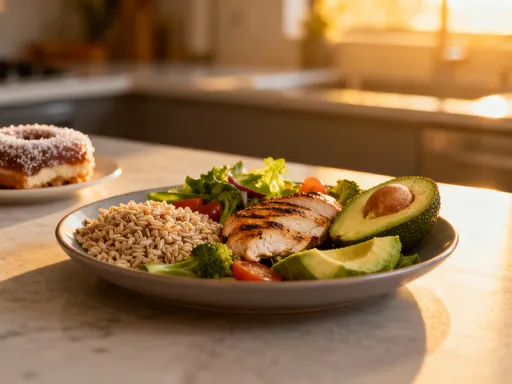
The turning point came when I stopped labeling foods as “good” or “bad.” Instead, I focused on balance. Every meal, I aimed to include three things: protein, fiber, and healthy fats. Protein helps maintain muscle and keeps you full — sources like eggs, beans, chicken, or Greek yogurt. Fiber, found in vegetables, fruits, legumes, and whole grains, supports digestion and helps regulate blood sugar. Healthy fats — from avocado, nuts, seeds, or olive oil — add satisfaction and help absorb essential nutrients.
This approach wasn’t about strict rules or portion counting. It was about structure. A typical lunch might be a salad with grilled chicken, chickpeas, spinach, cherry tomatoes, and a drizzle of olive oil. Dinner could be salmon with roasted sweet potatoes and broccoli. Breakfast might be oatmeal with berries and a spoonful of almond butter. These meals kept me satisfied, not stuffed. And because I wasn’t depriving myself, I didn’t feel the urge to binge.
Importantly, I also allowed room for enjoyment. I still eat dessert. I still go out to eat. But now, those moments are part of a balanced life, not derailments. I’ve learned that one meal doesn’t define my health — it’s the pattern over time that matters. When I eat something sweet or rich, I savor it, enjoy it, and move on without guilt. That freedom has been more powerful than any diet rule ever was.
Movement That Fits: Finding Joy in Everyday Activity
I used to think exercise had to be intense to count. If I wasn’t sweating through an hour-long workout, I believed I wasn’t doing enough. That mindset set me up for failure. Life got busy. I’d miss a session, feel behind, and eventually quit altogether. The real breakthrough came when I redefined what movement meant.
Instead of chasing the gym, I started looking for ways to move more throughout the day. Walking became my foundation. I began with just 10 minutes after dinner. Then 15. Then 30. Now, a daily walk is non-negotiable — not because I’m trying to burn calories, but because it clears my mind, lifts my mood, and keeps my body feeling strong. I don’t need special equipment or a membership. Just my shoes and the path outside my door.
I also embraced incidental movement — the small actions that add up. Taking the stairs instead of the elevator. Parking farther away. Standing while on the phone. Stretching in the morning. These aren’t dramatic workouts, but they keep my body active and my metabolism engaged. Research shows that non-exercise activity thermogenesis (NEAT) — the energy burned through daily movement — can significantly impact weight management over time.
Consistency, not intensity, is the key. A 20-minute walk five days a week is more effective in the long run than one intense two-hour session and four days of inactivity. When movement becomes a regular part of life, it stops feeling like a chore. It becomes self-care. It becomes something I look forward to, not something I dread. And that shift — from obligation to enjoyment — is what makes it sustainable.
Sleep and Stress: The Hidden Drivers of Weight
For years, I underestimated the role of sleep. I’d stay up late catching up on chores or scrolling through my phone, telling myself I’d sleep when I had more time. But poor sleep wasn’t just making me tired — it was sabotaging my progress. I noticed that on nights when I slept less than seven hours, I craved more sugar and caffeine the next day. I felt hungrier, less focused, and more emotionally reactive.
Science confirms this. Lack of sleep disrupts the balance of hunger hormones. Ghrelin, which stimulates appetite, increases. Leptin, which signals fullness, decreases. This biological shift makes overeating almost inevitable. Poor sleep also affects decision-making, making it harder to resist unhealthy foods. And it slows metabolism, reducing the number of calories burned at rest.
Stress had a similar effect. When I was overwhelmed — with work, family, or daily demands — I’d often turn to food for comfort. Not because I was hungry, but because it offered a temporary sense of relief. Emotional eating wasn’t a lack of willpower; it was a response to unmet emotional needs. The more stressed I felt, the more I relied on food to cope.
To break this cycle, I started building simple stress-reduction habits. I began with deep breathing — just five minutes in the morning and before bed. I established a bedtime routine: no screens an hour before sleep, a warm cup of herbal tea, reading a book. I also set boundaries with technology, turning off notifications and limiting social media. These small changes didn’t eliminate stress, but they gave me tools to manage it without turning to food. Over time, I noticed my cravings decreased, my energy improved, and my relationship with food became more balanced.
Environment Matters: Designing a Life That Supports You
One of the most powerful lessons I’ve learned is that willpower is overrated. It’s not about being strong enough to resist temptation — it’s about setting up your environment so temptation isn’t in your face. Our behaviors are shaped more by our surroundings than by our intentions. If healthy choices are convenient, we’re more likely to make them. If they’re hard, we won’t stick with them.
I started by making small tweaks at home. I kept a pitcher of water on the counter so I’d remember to drink more. I prepped vegetables at the beginning of the week so I could easily add them to meals. I laid out my walking shoes by the door the night before. These cues reduced friction and made healthy habits easier to follow. I also removed the biggest temptations — the cookies and chips I used to buy “just one,” which always turned into half the bag. Now, I don’t keep them in the house. If I want a treat, I have to make a conscious choice to go out and get it — and most of the time, I don’t bother.
I also adjusted my schedule to protect my priorities. Instead of trying to fit movement in when I had extra time — which never happened — I scheduled it like an appointment. Same with meals. I stopped skipping breakfast or eating lunch at my desk. I made time to sit down, eat mindfully, and enjoy my food. These changes weren’t about adding more to my day, but about honoring what mattered most.
Social habits shifted too. I stopped saying yes to every event that revolved around food. When I did go out, I planned ahead — eating a small, balanced meal first so I wouldn’t arrive starving. I also learned to say no without guilt. Not every gathering requires eating. Sometimes, it’s enough to enjoy the company. By designing a life that supported my goals, I stopped relying on willpower and started building a system that worked for me.
Progress Over Perfection: Staying on Track Without Burning Out
There have been setbacks. Holidays, vacations, stressful weeks — they’ve all tested my routine. I’ve eaten too much at a party. I’ve skipped walks. I’ve had days when I just didn’t feel like cooking and ordered takeout. But I’ve learned that one off day doesn’t ruin progress. What matters is what happens the next day. Getting back on track quickly, without self-criticism, is what keeps momentum going.
I also stopped measuring success by the scale. Weight fluctuates — it’s normal. What doesn’t lie are the non-scale wins. I have more energy. My clothes fit better. I sleep more soundly. I’m less irritable. I feel stronger. These are the real indicators of progress. When I focus on how I feel, not just how I look, I stay motivated even when the number doesn’t change.
The biggest win has been building a lifestyle I actually want to keep. This isn’t a temporary fix. It’s the way I live now. I don’t feel deprived. I don’t feel restricted. I feel in control. And that sense of ownership — of making choices that align with my well-being — is more powerful than any diet ever was. It’s not about being perfect. It’s about being consistent. It’s about progress, not perfection. And that’s what makes it last.
This journey wasn’t about dramatic overhauls but daily choices that added up. Managing weight effectively means changing how you live — not just what you eat. It’s slower, yes, but it lasts. The most powerful tool isn’t a trend; it’s the quiet commitment to showing up, again and again. If you’re ready to stop fighting your body and start working with it, the shift begins not with a diet, but with a decision: to live differently, one doable step at a time.