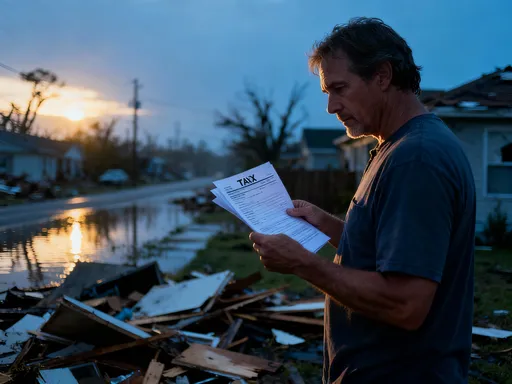
When Disaster Hits, This Is How I Protect My Finances
Natural disasters don’t just destroy homes—they shake your financial stability. I learned this the hard way when floods wiped out my town. Amid the chaos, I realized saving money wasn’t enough; smart tax planning was my real lifeline. In this article, I’ll walk you through practical, proven strategies that help protect your finances before, during, and after a natural disaster. These aren’t theoretical ideas—they’re lessons forged in real crisis. When water rose through the floors of my home, I didn’t just lose furniture and photographs—I faced unexpected tax consequences, insurance delays, and the stress of reconstructing my financial life from scratch. But over time, I discovered that with the right knowledge, even the worst events can become catalysts for stronger financial resilience. What follows is a clear, step-by-step guide to help you prepare, respond, and recover—without losing financial ground.
The Hidden Financial Storm: Why Natural Disasters Demand Tax Preparation
When a hurricane tears through a coastline or wildfires sweep across neighborhoods, the immediate focus is on safety, shelter, and survival. But beneath the surface of physical damage lies a quieter, more persistent threat—the financial storm that follows. Most people do not realize that a natural disaster can trigger complex tax implications that last for years. Without preparation, families may face unexpected tax bills, disallowed deductions, or missed relief opportunities. The truth is, tax planning is not just about filing returns on time; it’s about protecting your financial foundation when everything else feels unstable.
One of the most significant yet overlooked tools is the casualty loss deduction. Under U.S. tax law, if your property is damaged or destroyed due to a federally declared disaster, you may be eligible to deduct the loss on your tax return. This deduction applies to personal property such as homes, vehicles, and household items, provided the loss is not fully covered by insurance. However, many taxpayers fail to claim it because they don’t know it exists—or because they lack proper documentation. The IRS requires detailed records of ownership, value before and after the event, and proof of the disaster’s impact. Without these, even legitimate claims can be denied.
Insurance payouts are another area where confusion arises. While receiving a check from your insurer feels like a relief, not all payments are tax-free. If the amount exceeds your home’s adjusted basis—essentially what you paid for it plus improvements—it could result in taxable gain. Additionally, if you receive funds for temporary housing or business interruption, those may also have tax implications depending on how they’re structured. Understanding these nuances in advance helps prevent surprises when tax season arrives.
Emergency withdrawals from retirement accounts, such as 401(k)s or IRAs, are sometimes necessary during crises. Normally, early withdrawals come with a 10% penalty and are subject to income tax. However, under certain circumstances—such as a presidentially declared disaster—penalty exceptions may apply. The CARES Act set a precedent for this during the pandemic, and similar provisions have been extended in disaster zones. Knowing whether you qualify can save thousands in avoidable penalties. The key is acting with knowledge, not desperation.
Building Your Financial Shelter: Pre-Disaster Tax Strategies That Work
Just as a sturdy roof protects a house from the elements, a well-structured financial plan shields your wealth from the shocks of disaster. The best time to prepare is before the warning sirens sound. Proactive tax planning creates a buffer that can mean the difference between a manageable recovery and long-term financial strain. These strategies don’t require advanced degrees or expensive consultants—they demand only foresight, organization, and consistency.
One of the most effective steps is creating a comprehensive home inventory. This is more than a list of possessions; it’s a financial safeguard. Take photos or videos of each room, noting serial numbers, purchase dates, and estimated values. Store this documentation in a secure cloud-based system or encrypted external drive, ideally offsite. In the event of loss, this record becomes essential for insurance claims and casualty loss deductions. Without it, proving the existence and value of damaged items becomes nearly impossible. Think of it as an insurance policy for your insurance policy.
Digital backups extend beyond personal property. Keep scanned copies of tax returns, property deeds, mortgage statements, insurance policies, and bank records in a secure digital vault. Services like encrypted cloud storage or password-protected USB drives offer reliable protection. In disasters that destroy physical documents, these digital copies allow you to reconstruct your financial history quickly. The IRS accepts electronic records as valid proof, provided they are complete and verifiable. This small effort today can prevent months of bureaucratic struggle tomorrow.
Another smart move is optimizing your emergency fund within tax-advantaged accounts. While a standard savings account is useful, certain retirement accounts allow penalty-free withdrawals for qualified disaster-related expenses. For example, if a disaster declaration applies to your area, you may be able to access up to $100,000 from your IRA or 401(k) without the 10% early withdrawal penalty. You can also spread the income tax over three years or repay the amount within that timeframe to avoid taxes entirely. Knowing these rules lets you use retirement funds strategically, not as a last resort.
Documenting your property’s current value is equally important. If your home appreciates over time, its fair market value increases. In the event of total loss, this valuation supports your claim for full compensation. Consider getting a professional appraisal every few years, especially if you’ve made significant renovations. This not only strengthens your insurance case but also ensures accurate reporting if you must claim a casualty loss. Remember, the IRS measures loss based on decline in value, not emotional attachment.
In the Eye of the Storm: Managing Finances During a Crisis
When disaster strikes, emotions run high and priorities shift instantly. Safety comes first, then shelter, food, and communication. Yet even in the midst of crisis, certain financial decisions carry long-term consequences. Acting with awareness—even under pressure—can prevent costly mistakes. The goal isn’t perfection; it’s intentionality. Knowing which actions affect your tax status helps you navigate chaos with greater control.
One critical decision involves accessing retirement funds. If you lose income due to evacuation, business interruption, or job displacement, tapping into a 401(k) might seem like the only option. While sometimes necessary, it should never be the first move. Before withdrawing, confirm whether your area has been designated a federal disaster zone. If so, special tax relief may allow penalty-free access. But even then, consider alternatives: drawing from emergency savings, applying for low-interest disaster loans, or requesting forbearance on mortgage or loan payments. Each of these options preserves retirement assets, which are meant to grow over decades, not cover short-term emergencies.
Temporary living expenses also require attention. If you’re displaced and staying in a hotel or rental, keep every receipt. These costs may qualify as part of a casualty loss deduction or be reimbursed through insurance. Some disaster relief programs cover housing assistance, but they often require detailed expense logs. The IRS allows deductions for necessary living expenses incurred due to displacement, provided they exceed your normal cost of living. For example, if your usual housing cost is $1,200 per month and you pay $2,000 to stay elsewhere, the $800 difference may be deductible. Tracking this data diligently makes a difference at tax time.
Government aid is another area where clarity matters. Federal agencies like FEMA provide grants for housing repairs, medical costs, and personal property replacement. These grants are generally not taxable because they’re considered reimbursements for losses. However, if you receive multiple forms of assistance for the same expense—say, both insurance and a grant for roof repair—double-dipping could raise red flags. The IRS expects you to reduce your casualty loss deduction by the amount of any reimbursements received. This prevents claiming a loss that was already compensated. Understanding this rule helps ensure compliance and avoids audits later.
Communication with financial institutions is equally vital. Notify your bank, credit card issuer, and mortgage lender of your situation. Many offer hardship programs that pause payments, waive fees, or extend due dates during declared disasters. These accommodations don’t just ease cash flow—they also protect your credit score, which plays a role in post-disaster recovery, such as qualifying for loans or new housing. Keeping these lines open reduces stress and maintains financial stability during uncertainty.
Rebuilding with Relief: Post-Disaster Tax Breaks You Can Claim
Once the immediate danger passes, the real work begins—rebuilding your life, one step at a time. This phase also opens doors to valuable tax relief opportunities. The federal government, recognizing the financial toll of disasters, often enacts special provisions to support affected individuals and communities. These aren’t loopholes; they’re structured benefits designed to help you recover faster and with less financial strain. Knowing how to access them is key.
The most widely available benefit is the casualty loss deduction. To claim it, you must file Form 4684 with your tax return and itemize deductions on Schedule A. The deductible amount is the lesser of the decrease in fair market value or the adjusted basis of the property, minus any insurance reimbursement. For example, if your home’s value drops by $30,000 due to flood damage and your insurance covers $20,000, you may deduct the remaining $10,000, subject to certain thresholds. Keep in mind there’s a $100 floor per event and a 10% of adjusted gross income limitation on personal casualty losses. While this reduces the total deduction, it still provides meaningful relief.
Extended filing and payment deadlines are another critical form of relief. When a disaster is federally declared, the IRS automatically postpones tax deadlines for individuals and businesses in affected areas. This includes income tax returns, estimated tax payments, and even IRA contribution deadlines. For instance, if April 15 falls during a disaster period, filers may have until the end of the year or later to submit returns and payments without penalties. This breathing room allows people to focus on recovery rather than tax compliance under duress.
Disaster-related deductions go beyond property loss. Medical expenses caused by the event—such as emergency care, therapy, or temporary medical equipment—may be deductible if they exceed 7.5% of your adjusted gross income. Similarly, charitable contributions made to verified disaster relief organizations can increase your deduction. Donating money, clothing, or supplies not only helps others but also strengthens your tax position. Just ensure you obtain written acknowledgment for donations over $250 to substantiate the gift.
The tax treatment of grants and assistance programs is generally favorable. As mentioned, FEMA grants are non-taxable. So are many state and local aid programs, as well as assistance from recognized nonprofits. However, if you receive compensation for lost income—such as through a business interruption policy—it may be reportable as taxable income. Distinguishing between reimbursement and income is crucial. Reimbursements for lost property or medical costs are typically tax-free; payments for lost profits or wages usually are not. Sorting this out early prevents misreporting and potential audits.
Smart Moves That Save Money: Real Examples from Real Crises
Numbers and rules matter, but real stories make them come alive. Behind every tax code section is a family trying to rebuild after loss. The following examples are based on anonymized cases from actual disaster recoveries. They illustrate how smart planning, combined with timely action, led to better outcomes. These are not extreme outliers—they reflect what’s possible with preparation and awareness.
Consider a homeowner in Louisiana affected by severe flooding. Her house suffered $80,000 in structural damage, and her insurance covered $65,000. She had maintained a detailed home inventory with photos and receipts stored in the cloud. Using this documentation, she filed a casualty loss deduction for the uncovered $15,000, reducing her taxable income significantly. Because her area was a declared disaster zone, she also qualified for an extended filing deadline, giving her time to gather records while displaced. By coordinating with a tax professional familiar with disaster provisions, she maximized her relief and avoided penalties.
Another case involves a small business owner in California whose shop was damaged by wildfire. His commercial property insurance covered rebuilding costs, but he faced a temporary shutdown. During this period, he accessed $40,000 from his SEP-IRA under the disaster withdrawal exception, avoiding the 10% penalty. He used the funds to pay employees and lease a temporary location. Because he repaid the amount within three years, he owed no income tax on the withdrawal. This strategic use of retirement funds kept his business alive and preserved jobs, demonstrating how tax rules can support economic resilience.
A third example features a couple in Florida who lost personal belongings in a hurricane. They donated undamaged items to a local shelter and kept records of the donations. They also received a FEMA grant for temporary housing. By understanding that the grant was non-taxable and that their donations were deductible, they improved their financial position while helping others. Their ability to navigate these rules stemmed from prior research and consultation with a financial advisor before the storm hit.
These stories share a common thread: preparation turned crisis into opportunity. None of these individuals were tax experts, but they took basic steps—documenting assets, understanding relief options, and seeking guidance—that made all the difference. Their experiences show that financial resilience isn’t about wealth; it’s about readiness.
Avoiding the Traps: Common Financial Mistakes People Make After Disasters
Even well-intentioned people make costly errors in the aftermath of disaster. Stress, urgency, and lack of information create fertile ground for financial missteps. Some choices seem logical in the moment but lead to long-term consequences. Recognizing these pitfalls in advance helps you avoid compounding trauma with preventable financial damage.
One of the most frequent mistakes is withdrawing retirement funds unnecessarily. Many people assume they must cash out a 401(k) to cover immediate needs. But without confirming eligibility for penalty exceptions, they trigger avoidable taxes and penalties. Worse, they deplete long-term savings that could have been preserved. Before acting, always verify whether your area qualifies for disaster-related relief and explore all alternatives first.
Another common error is failing to document losses properly. People often discard damaged items too quickly, before taking photos or making lists. Once the debris is gone, proving the extent of loss becomes difficult. The IRS requires evidence to support deductions, and without it, claims are denied. Always document before cleanup. Take wide-angle and close-up photos, save receipts if possible, and write detailed descriptions.
Some individuals file casualty loss claims without adjusting for insurance reimbursements. This leads to overstated deductions and potential audits. Remember, you can only deduct the portion of loss not covered by insurance. Double-check all reimbursement amounts before calculating your deduction. Accuracy protects you from future complications.
Ignoring extended deadlines is another oversight. The IRS automatically grants relief to declared disaster areas, but not everyone knows about it. People rush to file on time, missing out on valuable extensions. Always check the IRS website or consult a tax professional to confirm whether your area is included in a disaster relief notice. This simple step can eliminate late-filing penalties.
Finally, some overlook the importance of professional guidance. While it’s possible to handle taxes alone, disaster-related filings involve complex rules. A qualified tax preparer or financial advisor can identify opportunities you might miss and help avoid errors. Their fee is often far less than the value of the relief they help you secure.
Long-Term Resilience: Turning Crisis into Financial Clarity
Disasters expose vulnerabilities—but they also offer a rare chance to rebuild stronger. The emotional toll is real, but so is the potential for transformation. Financial recovery isn’t just about replacing what was lost; it’s about creating a more resilient system for the future. True security doesn’t come from hoping disaster never strikes. It comes from knowing you can withstand it when it does.
One powerful step is revising your estate plan. A disaster can highlight gaps in wills, trusts, or beneficiary designations. Updating these ensures your wishes are honored and simplifies matters for loved ones. It also allows you to integrate disaster-related directives, such as naming someone to manage financial decisions if you’re displaced.
Reviewing and upgrading insurance coverage is equally important. Standard policies often exclude flood, earthquake, or wildfire damage unless specifically added. After a loss, reassess your risks and adjust coverage accordingly. Consider umbrella policies for extra liability protection. Adequate insurance doesn’t prevent disaster, but it minimizes financial fallout.
Integrating tax-aware planning into your annual routine builds lasting resilience. Schedule a yearly review of your home inventory, update digital backups, and confirm retirement account rules. Treat financial preparedness like fire drills—routine, not reactive. Over time, these habits become second nature, reducing panic when crisis hits.
Finally, share what you’ve learned. Talk to neighbors, family, and community groups about financial preparedness. Host a workshop on creating home inventories or invite a tax professional to speak. Collective awareness strengthens entire communities. When more people are ready, recovery is faster and more complete.
Disasters are unpredictable, but your response doesn’t have to be. With the right knowledge, tools, and mindset, you can protect your finances, support your family, and emerge not just recovered—but renewed. The storm may take much, but it doesn’t have to take your peace of mind.